This video gives an insight into the work and was filmed at a recent coach development day.
]]>
engagement and experiences. However, not all young athletes are the same. Some young athletes
may display perfectionistic tendencies, which can have a negative impact on the quality of their
engagement in sport.
What is perfectionism?
Perfectionism is about the unrealistic expectations that people can have for themselves and for
other people in their life. There are several forms of perfectionism:
- Some people expect themselves to be perfect (self-oriented perfectionism).
- Some people expect other people to be perfect (other-oriented perfectionism).
- Some people think that other people in their life, like a parent, coach, or teacher, expect
them to be perfect (socially prescribed perfectionism).
Over twenty years of scientific research has shown that everyone is perfectionistic to some degree.
Some people have high levels of perfectionism. Other people have low levels of perfectionism. Most
people are somewhere in between.
How does perfectionism affect young athletes?
Dr Sarah Mallinson-Howard and colleagues have shown that perfectionism undermines the potential
for sport to be a rewarding experience for young athletes. How it does so, depends on the
perfectionistic tendencies they have:
- If young athletes expect themselves to be perfect, it won’t mean they work hard and
perform better. Instead, it can mean they will experience lots of unnecessary anxiety and
worry. - If young athletes expect others to be perfect, it can impact negatively on their relationships
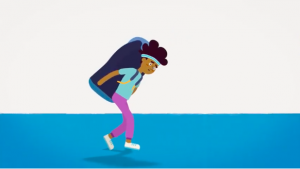
(e.g., friendships) and they will feel less supported when they need help. - If young athletes believe that other people expect them to be perfect, they can feel
unhappy, stressed, and lonely. This is the worst form of perfectionism.
What can parents do?
If parents are concerned about their child’s perfectionistic tendencies and would like to help them
better manage their expectations and feel supported, here are three handy tips:
1. Encourage and support your child to feel good about things other than how they perform in
sport (or elsewhere), such as being a kind person.
2. Reward your child’s efforts even if things don’t go well (or perfectly). Mistakes are part of
learning and should be accepted.
3. Emphasise to your child that sometimes things just need to get done. Things can’t always be
perfect. You can learn a lot by just doing things (rather than trying to do things perfectly or
putting things off when they are unlikely to be done perfectly).
For further guidance and information, please see these documents for parents and check out the
video in this blog.
Whilst all young people are perfectionistic to some degree and certain parenting strategies may
help, if you are at all concerned that your child is having problems with their mental health (e.g.,
they are upset all the time) talk to them about it and arrange to see their GP.
Dr Sarah Mallinson-Howard is Associate Head of Sport and Senior lecturer in Sport and Exercise
Psychology in the School of Science, Technology, and Health at York St John University, UK. As
Engagement Lead for the Motivation, Performance, and Well-being (MPaW) Research Group at York
St John University, her research focuses on understanding how perfectionism influences the
engagement and experiences of athletes, in particular young athletes, and how perfectionism might
best be managed by parents, coaches, and athletes themselves.
One of the best videos we have come across over the last couple of years to demonstrate the importance of our behaviours and attitudes in our role as sporting parents.
Your children will be watching you! We often chat with parents about how on the whole they are the most influential people in their young children’s life and how our children will often take their lead from us.
This is one of those amazing videos where you cannot quite believe how similar the behaviours and traits are of father and son. Hope you enjoy the video as a parent as much as we have and it helps to reinforce the vital role that we play with our role modelling.
]]>We will be delivering our workshop ‘Engage’ – building positive relationships with your gymnasts parents on Sunday 24th January.
British Gymnastics have organised an outstanding array of speakers for the event including Dr Sophia Jowett, Dr Bob Muir and Stephen Rollnick.
To find out more about the event please click here.
]]>We champion the sports parent coach as without the work of these parents many sports programmes would not exist.
It is a wonderful opportunity for parent and child to bond further, an opportunity for the parent to be actively involved in their child’s life and most importantly a chance to create great memories for the years to come.
I remember fondly the time my own father spent coaching me ‘mini rugby’ when I was between the ages of 6 and 8 and I can still picture him now kitted out in his tracksuit smiling and encouraging all that wanted to participate in the game.
”The major positive aspect includes being able to spend quality time together. Additionally, your child perceives that he/she gets special attention, praise, and perks, such as being on familiar terms with the coach. In the child’s perception, having you as a parent as a coach is an opportunity to receive motivation and technical instruction that others on the team do not get. In the perspective of the parent, being both coach and parent provides the opportunity to teach values and skills, the opportunity to see how your child interact with friends, and the ability to see your child’s accomplishments and take pride in them” – Weiss & Fretwell 2005
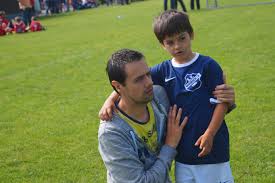
However, in making the decision to coach your own children there are a number of things that need to be considered.
Here are a few helpful tips to ensure that the shared experience is a positive one.
- Before you think of volunteering have a discussion with your child about how they feel about you potentially being their coach and your wider family network to see how they feel about you taking on the role.
If you decide that the coaching role may not be right for you at this point in time, revisit it at a later date and offer to help in other ways that are not quite as obvious if you would like to play a greater role and volunteer your time.
- Ensure there is a difference between you being the parent and the coach. In other words, are you able to separate the ‘Two Hats?’
Your child will need to know that when you are the coach you need to treat all players equally but as soon as you become the parent again you need to make sure your child knows that you care about them the most. Work hard not to muddy the waters on this and have some strategies in place.
- Try to strike the right balance on praising and penalising your child.
I found this very tough as a coach and was probably too tough on my own child and did not give out enough praise for the right things. Many coaches that we have spoken to find this extremely demanding and worry about how they are perceived by other parents and athletes.
- Think about your conversations with your own child
Try not to discuss other parents and other athletes with your child particularly in a negative vane.
It makes things really tricky for a young child who is probably very good friends with other athletes and whose parents you may be criticising. The child needs to make his own mind up about the other players and you should not be looking to form a coaching alliance.
At this stage they are not your assistant and our children will often take their lead from what we say and what we do.
- Work hard to be the ultimate role model – you are in a privileged role!
We can never be perfect all the time, but we are in such a privileged role when coaching young people and our own children.
Try to act in a way that would make your son or daughter proud to have you as a parent and a coach.
Particularly on the side-line when you may feel under the most pressure, try to remember that your child is not the only one that’s performing during the event. You will set the tone for those all around you with your demeanour and behaviour.
- Don’t let the coaching role take over the rest of your life
Try not to spend the rest of the week practising further at home and talking about last week’s event or game the whole time and the so called ‘big match’ coming up. It is too much and too much overload for a child and for the rest of the family.
Do other things as a family away from the sport. That way everyone stays fresh and does not resent the huge commitment that you have taken on.
I’ll finish by saying enjoy the experience and without parent coaches we would have no game and most teams wouldn’t even exist.
My advice is don’t coach your own child forever. Experiencing other coaches and other environments is so important for all children particularly if you start in this role with your child at the youngest ages and whilst they may be positive about you taking on the role initially, their views may change as they get older.
Keep checking in and keep the conversation lines open to discuss if it is working for everyone.
I would suggest that you devote some of your time to just being a dad or mum (supporting from the side-lines) and if it’s time to let go (as the coach), let them go.

‘When they get to a certain stage and they are keen to progress, hand them over to a qualified coach and let them do their job without interference. Support from afar!’ (David Leadbetter, World Leading Golf Coach)
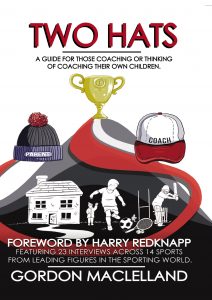
Don’t forget to check out our brand new product ‘Two Hats’ featuring advice, support and encouragement for all parent coaches including 23 interviews across 14 sports from leading figures in the sporting world.
“It is a great privilege to be part of this project alongside so many leading figures from across the sporting world covering such a wide range of sports. It is certainly enlightening seeing so many similarities across sports in terms of coaching your own child as well as some of the uniqueness that each sporting environment can provide.” Harry Redknapp
Order your copy today by clicking here.
]]>
In her initial work mapping fun with young athletes, the overwhelming conclusion was that, according to them, the experience of having fun while playing sport is made up of 81 specific actions and behaviours (called fun-determinants) and that young athletes themselves, coaches, teammates, parents, officials, playing conditions, and the organisational structure of practices and games (see infographic) each play a critical role. In retrospect, that makes perfect sense doesn’t it?
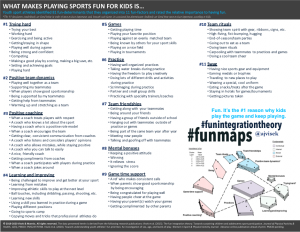
As you can see from the infographic here, these fun determinants can range from ‘getting and staying in shape’ ‘helping support teammates’, ‘getting playing time’ to ‘winning’ and ‘playing in tournaments’ – to name a few. The key is to promote, encourage, create as many of these fun-determinants as possible in children’s sporting experiences.
This is why we encourage parents to check in with their children on a regular basis. Asking your child-athlete whether they had fun and what was the most fun during that day’s practice or game – and even what was not fun – can help us us understand their motivations and immediate feedback we need to best support them along their sporting journey. You can read more about this here.
Interestingly, we are prone to believing that winning and scoring would be high on the adult agenda of what is fun (and it probably is for adults) and important for their children. However, whilst winning may be a determinant of what makes the experience fun for children, it doesn’t make the top of the list in terms of importance. In fact, it falls in the middle of the list of 81 fun-determinants, when rated from most important to least important. This causes the most surprise when we present this information in our workshops. Upon further reflection though, this too makes sense, does it not? Winning is simply the outcome of the competitive match, though the process of playing and moving and being challenged is what Dr. Visek’s research is finding is of greater importance. Indeed, children, who authored the FUN MAPS identified trying hard, being challenged in learning environments, setting goals and working toward achieving them, and having the opportunity to play and compete as fun.
While we think our children are often motivated by different things or that what is fun for one child is dramatically different to another, emerging research is finding that this is not the case.
In her most recent work, Dr. Visek has found interesting trends related to girls and boys. In sport, we girls and boys are often separated believing that they require different approaches and different learning environments. This is indeed right for a number of reasons, however their motivations and what they find fun are more similar to one another than we previously thought.

I am delighted to be joined by Dr. Visek herself to explain more…
‘Thank you to Working With Parents in Sport for the opportunity to expand on what the research is finding, so far, which largely debunks long held expectations and stereotypes about what is fun for our athletes.
Typically, people expect sex (girls compared to boys), age (younger athletes compared to older athletes), and playing level (grassroots recreational sport compared to highly select, competitive travel sport) differences when it comes to what makes sport fun. Meaning, the tendency is to believe that girls and boys, younger and older, and recreational and competive sport athletes are demonstrably different from one another in creating fun playing experiences and fueling their motivations to continue playing.
The research data, however, does not support this – and in fact indicates that young athletes are more similar to one another than different. Thus, what is most fun for girls is largely the same for boys and this trend holds for age and playing level as well. While these findings may come as a surprise, what we know from developmental psychology, neuroscience, and behavioural neuroendocrinology actually supports the absence of differences found.
What is really exciting about these findings is that when doing workshops, clinics, and keynotes around the world sharing the FUN MAPS research findings, you can see girls and women in the audience who feel like they have finally been heard – that what they want and desire from sport – what drives them to continue playing, to excel, and that is fun – is the same as the boys and men.’
Amanda J. Visek, PhD, CMPC is an Associate Professor in the Department of Exercise & Nutrition Sciences in the Milken Institute School of Public Health at The George Washington University in Washington, D.C., USA. Her translational approach to scientific research has focused on the application of pediatric sport psychology to issues of public health, namely improving child and adolescent health outcomes by establishing sport participation as a public health practice through safe, positive physical activity and human movement experiences that are fun.
]]>
To access all of their infographics and further support please click here.
]]>